
Author:

Portugal’s labour market reform allowed firms to become more responsive to changes in their profitability. But productivity did not rise because growing market power offset much of the benefit of greater flexibility.
Following the European sovereign debt crisis of 2010-2014, countries like Italy, Spain, Greece, and Portugal were required to revamp their admittedly fragile economies. In an attempt to boost productivity and restore growth, a common policy prescription concerned their strict labour markets: policymakers were advised to add more flexible clauses to their national labour laws. The logic was straightforward: if firms could hire and dismiss workers more easily, labour would move more quickly towards the most profitable businesses. As this reallocation takes place, aggregate productivity rises.
Although a wave of labour market liberalization episodes swept all these Southern European economies, the Portuguese case stands out as particularly insightful. First, because before the reforms introduced between 2011 and 2013 its labour market featured as the most stringent across all OECD countries. Owing to significant reductions in the amount of severance paid to dismissed employees and the inclusion of a new and more flexible reason to justify fair dismissals, among numerous other provisions, costs of firing were effectively slashed and the strictness of the labour market was brought much closer to the OECD average. And second, because the expected productivity gains did not appear. New employment contracts are written under more flexible rules since late 2013, but this has not prompted any noticeable swings in either the mean nor the dispersion of labour productivity (Figure 1, panel A). They also seem to have been incapable of reversing the declining pace of job flows across firms (Figure 1, panel B). Why did this happen? Is productivity surprisingly immune to a more flexible labour market?
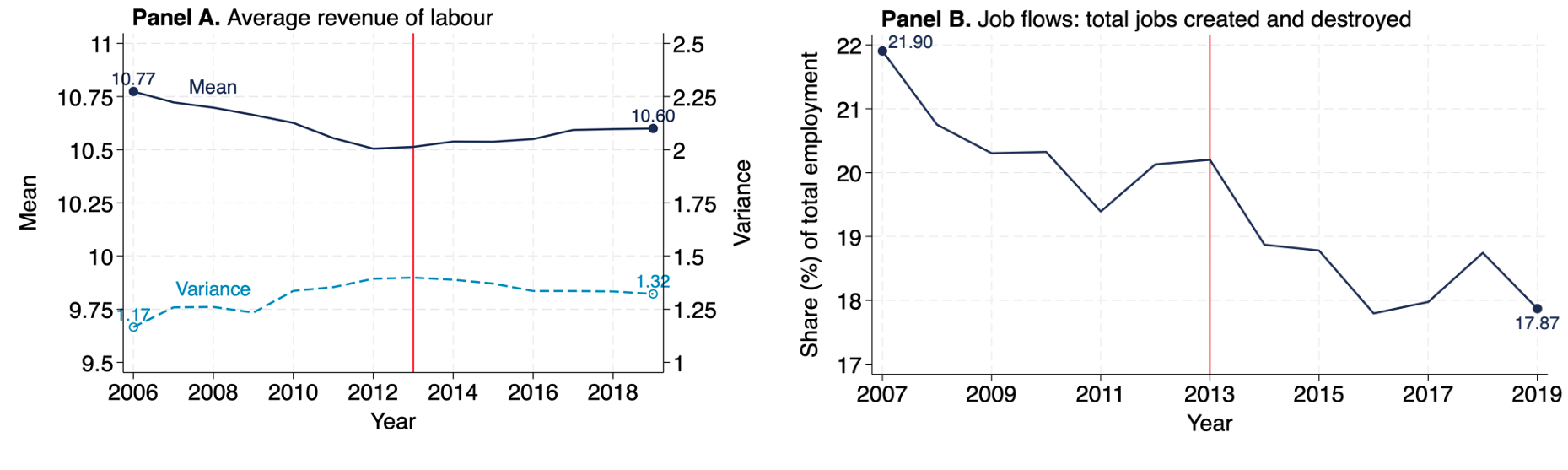
Figure 1. Summary of the paper’s key quantitative results.
A reform that worked at the firm level
In a recent paper on Portugal’s labour market reform I rely on a dataset covering almost all Portuguese non-financial firms to demonstrate that the implemented policies did deliver on one of their intended goals: after the reform, firms became more responsive to changes in their productivity and demand circumstances. In short, my results indicate that, under a more flexible labour market, firms are likelier to adjust their workforce in the presence of large shocks to their profitability; for firms that do adjust, the size of those adjustments is also greater in absolute terms. For example, a positive one standard deviation profitability shock now raises employment growth by 5.6 percentage points (pp), whereas before it only did so by 2.3 pp.
Lower adjustment costs changed firm behaviour in exactly the direction policymakers had envisaged. But if a more flexible labour market did enhance their employment responsiveness, why has productivity remained unchanged?
Why productivity did not follow
The puzzle is better understood in light of a concurrent development in the Portuguese economy. In the paper I show that the post-reform period also coincided with rising product market power. As demand became less sensitive to price changes, firms could charge higher markups: the estimated aggregate markup rose from 22 before the reform to 40 afterwards.
This matters for productivity because growing market power deteriorates the allocation of labour across firms. In a perfectly competitive economy, workers move towards businesses which can use them more productively. That sorting subsides when firms face less competitive pressures: less profitable firms benefit from inflated market shares and can retain workers, which would have otherwise flowed to more efficient rivals. The result is a wider dispersion of productivity levels in the economy, a measure closely linked to the concept of misallocation.
Intuitively, one can then raise the hypothesis that the flat evolution of productivity observed in the data is the outcome of these two offsetting mechanisms: reduced costs of adjustment brought by the reform prompt labour to move towards better uses, but growing market power hampers that movement.
These competing forces are best handled within a theoretical framework which can separate their effects. While mimicking key features of the data, I estimate a structural model of firm dynamics which corroborates that hypothesis. I do so through two counterfactual exercises which ask what would have happened under different combinations of labour adjustment costs and market power. If market power had remained unchanged, the dispersion of labour productivity would have dropped 14 and allocative efficiency would have improved accordingly. Yet, if labour adjustment costs had not been cut by the reform, the same dispersion would instead have risen by 11. Flat productivity should not be read as evidence that a more flexible labour market does nothing; instead, it mirrors these two counteracting forces which largely offset each other.
The broader policy lesson
Ultimately, the paper argues that the Portuguese reform did raise firms’ employment responsiveness through lower costs of adjustment, but the corresponding effect on productivity was fully offset by a simultaneous increase in market power. These are informative lessons which should not be discarded. Topics such as muted growth, the lack of competitiveness, and waning business dynamism have taken centre stage in European policy circles. Some of these debates are also ongoing in the US. Importantly, they are very likely to demand newer and increasingly flexible clauses in national labour laws. The Portuguese case suggests that more flexibility can indeed boost the employment responsiveness of firms. But that may not be sufficient to lift productivity when rising market power is a documented trend in most European and North American economies. In the paper I show that labour market reforms and competition policy cannot be treated separately by policymakers. If governments want higher productivity, they need both easier adjustments and stronger competitive pressures to allow workers to move towards firms which will put them to their best usage.
Author: José Pedro Garcia