Author:

Tourism is booming in European cities, and with it, tensions are rising. Residents are increasingly voicing their concerns about crowded streets, the loss of everyday shops, and neighbourhoods that feel more like places to visit than to live. A closer look at Florence shows how tourism, amplified by the growth of short-term rentals, is quietly reshaping the fabric of everyday life.
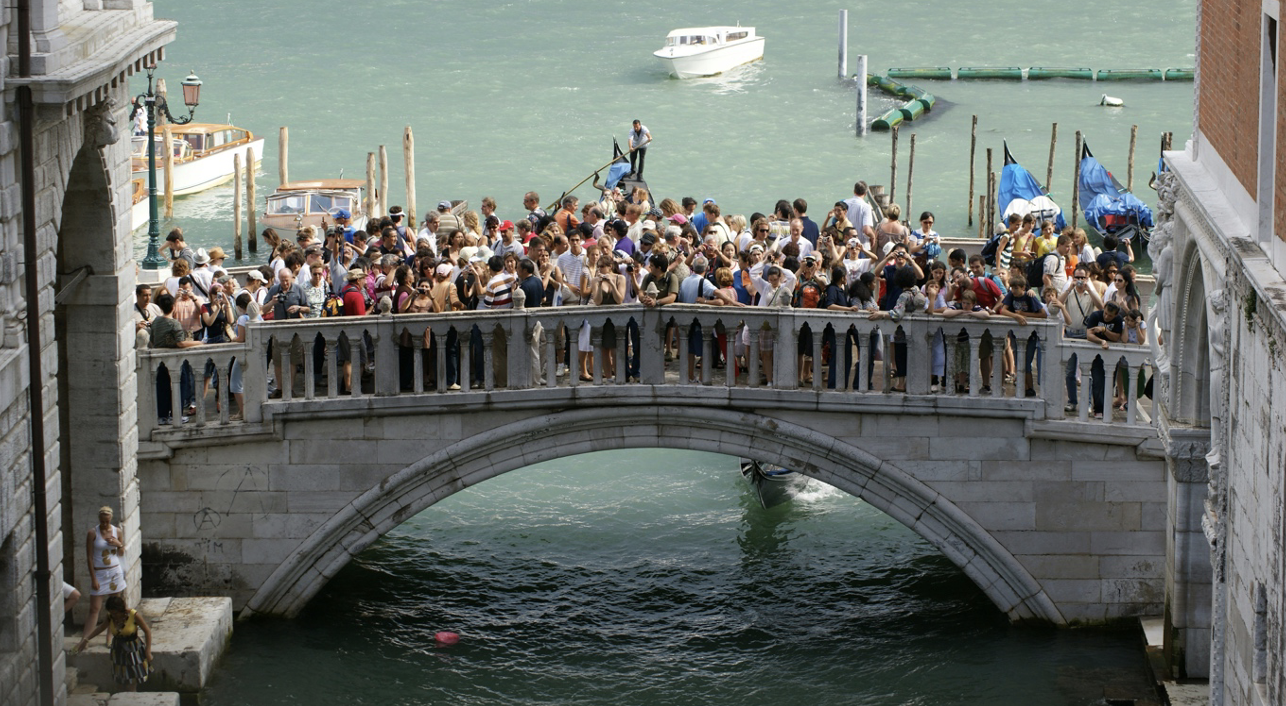
After coming to a complete standstill during the Covid-19 crisis, tourism in Europe is not only back – it is booming. By 2024, international arrivals had returned to 99% of pre-pandemic levels, with urban destinations leading the surge. Places like Lisbon, Venice and Barcelona now welcome more than ten times their resident populations in annual visitors. Florence, home to just under 370,000 people, hosted over five million tourists in 2023.
Over recent decades, tourism has become a major part of the economy in these cities. In Lisbon, it made up nearly 20% of the city’s GDP before the pandemic. By 2022, Barcelona’s tourism sector had generated €9.6 billion and employed around 130,000 people. In Venice, revenues from holiday-makers reached €1.67 billion that same year.
Parallel to this growth is the rapid expansion of short-term rental platforms. Airbnb alone counts more than 4.8 million active listings in Europe, with Italy consistently among the platform’s largest markets. In Florence, Airbnb listings have grown from a few hundred in 2012 to over 12,000 active ‘units’ by 2024. Over 70% are concentrated in the city’s historic centre.
What began as a way to share a spare room has since evolved into a professionalised market. In Florence, 69% of listings are managed by multi-property hosts – a pattern seen across many European cities.
Tourism has long shaped cities. But today’s dynamic is different – driven both by the speed of global travel and the spread powered by short-term rental platforms like Airbnb and Vrbo. The rise of low-cost airlines has made weekend breaks and other short stays more accessible than ever, expanding who travels and how often. These shifts don’t just enlarge the tourism market. They also change where visitors stay and how they interact with the city. It is no longer a matter of hotels in designated areas. Now tourists have access to thousands of apartments woven into everyday residential life.
This shift changes the divide between those who benefit from tourism and those who bear its costs, raising questions about how cities can remain both welcoming and liveable.
Short-term stays, long-term consequences
Short-term rentals have enabled more flexible and immersive ways to travel, but they have also introduced new pressures on local communities. Unlike hotels, short-term lets are embedded within homes and apartment buildings, where tourists and residents live side by side. In cities like Florence, Barcelona and Lisbon, residents increasingly worry that their neighbourhoods are losing their ‘character’ and ‘authenticity’ and are being replaced by a version of the city designed more for visitors than for locals. In Barcelona, thousands of residents have repeatedly protested against tourists, spraying graffiti across the city with the slogan “Go Home Tourist”. Last summer protesters even sprayed visitors with water guns.
Studies suggest that rising Airbnb density is associated with higher long-term housing and rental prices, especially in cities with tight real estate supply (Barron et al., 2021; García-López et al., 2020). Recent research also shows that amenities are shifting towards the preferences of tourists (like luggage storage and tourist-focused restaurants), while long-standing residential services (like local grocers) are in decline (Almagro and Domínguez-Iino, 2024; Hidalgo et al., 2024).
Yet these patterns can be hard to track. This is partly because neighbourhood change is slow, uneven and difficult to measure. A tourist café replacing a repair store is not necessarily a crisis. But when enough of these changes cluster in one area, they can gradually reconfigure the entire character of a place.
A dataset to trace neighbourhood change
To bring clarity into these patterns, in a forthcoming study I bring together multiple datasets to trace how Florence is changing at the neighbourhood level. This includes:
- Airbnb listings from InsideAirbnb, geolocated and categorised by rental type (entire home, private room, etc).
- Firm-level business data from the Chambers of Commerce, using each firm’s activity description to classify whether it caters primarily to tourists or residents.
- Residential registry data from the municipality of Florence, capturing household relocations at the census track level over the last 25 years.
Together, these sources help build a detailed view of how neighbourhoods evolve under tourism pressure. By linking changes in short-term rental activity with shifts in local business composition and patterns of residential movement, the study aims to uncover which areas are changing most and how.
Although the project is still in progress, the results (expected later this year) will contribute to a more informed debate around short-term rentals in tourism-heavy cities like Florence.
Why this matters
Public debate around short-term rentals is polarised. Some see Airbnb as a tool of ‘touristification’. Others view it as a flexible income source and boost to the local economy.
By linking tourist activity to shifts in business composition and residential patterns, my study aims to open a more informed conversation about where, when, and how change is taking place, and what kinds of neighbourhoods are most affected.
A clearer understanding of how tourism reshapes neighbourhoods can also help cities design more targeted and proportional policies – whether that means regulating short-term rentals, protecting resident-serving businesses, or re-thinking how public space is managed in areas under tourist pressure. In the absence of such evidence, policies risk being either too blunt or too late.
Author: Mafalda Batalha
Malfalda Batalha is a second-year PhD researcher at the EUI Department of Economics. Her main research interests are in applied microeconomics, with a focus on urban economics, migration and public policy evaluation.